

Introduction
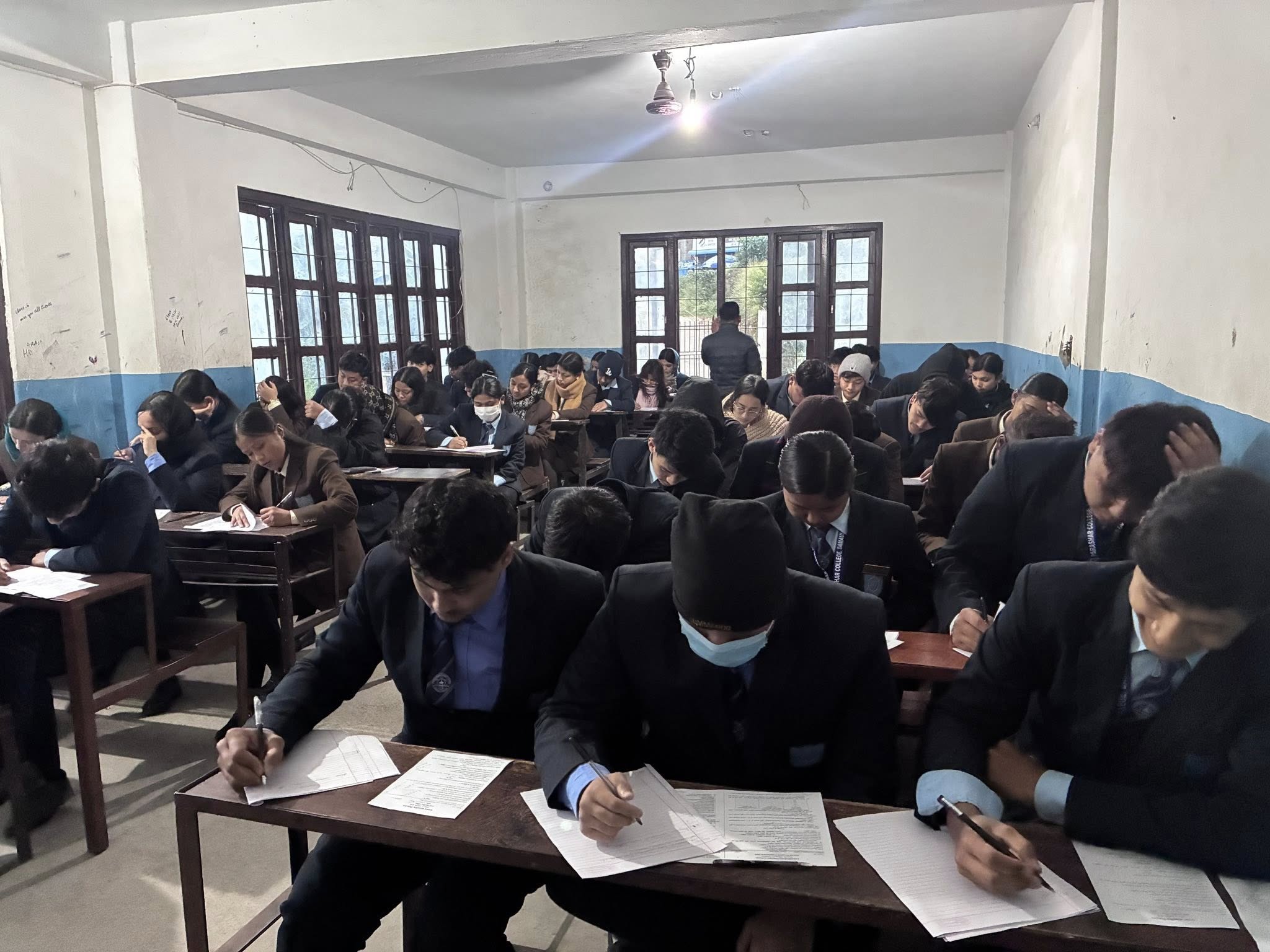
Education is meant to develop knowledge, skills, values, and confidence in students. However, in Nepal, education is largely shaped by examinations rather than learning itself. From an early age, students are trained to focus on marks, ranks, and grades. Success is often measured not by understanding or skills, but by exam results.
This exam-oriented learning culture has deeply influenced the mindset of students, parents, teachers, and institutions. While examinations are important for evaluation, over-dependence on exams has created serious challenges in Nepal’s education system. This article analyzes the exam-oriented learning culture in Nepal by exploring its background, meaning, causes, methods, and long-term impact.
You May Like:



Background of Exam-Oriented Education in Nepal
Nepal’s formal education system has long been structured around examinations. Major academic milestones such as SEE, Class 11 and 12 board exams, entrance tests, and competitive exams determine a student’s future opportunities. Over time, exams became the central goal of education rather than a tool for assessment.
Limited higher education seats, intense competition, unemployment, and social pressure have strengthened the importance of exams. Parents expect high marks as proof of success, schools advertise results to attract students, and teachers are judged by pass percentages. As a result, learning gradually shifted from understanding concepts to scoring marks.
This background created a system where exams dominate the entire learning process.
What Is Exam-Oriented Learning Culture?
Exam-oriented learning culture refers to an education system where teaching, learning, and assessment are focused mainly on examinations and marks.
In this system, students study not to gain knowledge, but to pass exams. Teachers teach what is likely to be asked in exams. Schools prioritize exam preparation over creativity, critical thinking, and practical skills.
Learning becomes limited to textbooks, notes, and guess questions. Success means scoring higher than others, not learning better. This culture reduces education to a competition rather than a process of growth.
Why Exam-Oriented Learning Exists in Nepal
One major reason behind exam-oriented learning is intense competition. With limited opportunities in higher education and employment, exams act as a filtering system. Students believe that high marks are the only way to secure a better future.
Another reason is social pressure. Families often judge students based on results. Relatives, neighbors, and society frequently ask about marks rather than skills or interests. This pressure pushes students to focus only on exams.
Institutional pressure also plays a role. Schools and colleges are ranked by exam results. Teachers are expected to complete syllabi quickly and produce good results. This environment discourages experimentation and student-centered learning.
Additionally, lack of skill-based education and weak practical exposure force students to depend on exams as proof of ability.
How Exam-Oriented Learning Shapes Student Behavior
Exam-oriented learning changes how students think and study.
Students focus on memorizing answers instead of understanding concepts. They study selectively, ignoring topics that are less likely to appear in exams. Learning becomes short-term, aimed at passing exams rather than long-term knowledge.
Fear of failure becomes common. Students experience stress, anxiety, and self-doubt. Creativity and curiosity slowly disappear because students are afraid to make mistakes.
Instead of enjoying learning, students see education as pressure. Many lose confidence and motivation once exams are over, as they feel disconnected from real-world skills.
Role of Teachers in Exam-Oriented Culture
Teachers often become exam trainers rather than educators.
Due to syllabus pressure and performance expectations, teachers focus on completing courses quickly. Teaching methods emphasize notes, question patterns, and exam techniques. Classroom discussions, practical activities, and critical thinking are often ignored.
Although many teachers understand the limitations of exam-oriented education, the system restricts them. When evaluation depends only on marks, teaching naturally follows the same path.
Teachers are forced to teach for exams, not for life.
Impact on Learning and Skill Development
The exam-oriented culture has a serious impact on skill development.
Students rarely develop communication skills, problem-solving abilities, creativity, or teamwork. Practical knowledge remains weak. Many students struggle when they enter higher education or the job market because they lack real-world skills.
This creates a gap between education and employment. Graduates hold certificates but lack confidence and competence. Employers often complain that students are academically qualified but practically unprepared.
Education loses its true purpose when learning stops at exams.
Psychological Impact on Students
The emotional cost of exam-oriented learning is high.
Constant pressure to perform creates fear of failure. Students begin to associate self-worth with marks. Poor results lead to low confidence, anxiety, and sometimes depression.
Many students feel lost after exams, unsure of their interests or abilities. The system rarely helps students discover their strengths. Instead, it ranks them based on a single exam performance.
Mental well-being becomes a silent victim of exam-centered education.
How Exam-Oriented Learning Affects Society
The effects of exam-oriented learning extend beyond classrooms.
Society produces individuals who are good at passing exams but hesitant in decision-making and innovation. Risk-taking, creativity, and entrepreneurship remain limited.
When education does not encourage critical thinking, society struggles to adapt to change. Development slows down because human potential is not fully utilized.
Education shapes the future of a nation. When learning is limited to exams, national progress is also limited.
Moving Beyond Exam-Oriented Learning
Exams should evaluate learning, not control it.
Nepal’s education system needs to balance assessment with skill development. Conceptual learning, practical exposure, project-based evaluation, and continuous assessment can reduce exam pressure.
Teachers should be encouraged to adopt student-centered teaching. Students should be guided to understand learning as a lifelong process, not just exam preparation.
A shift from marks to meaningful learning can transform education in Nepal.
Conclusion
Exam-oriented learning culture in Nepal is deeply rooted in social expectations, institutional pressure, and limited opportunities. While exams play an important role, over-dependence on them has weakened true learning, skill development, and student well-being.
Education should prepare students not only to pass exams but to face life with confidence, competence, and creativity. Moving beyond exam-oriented learning is not easy, but it is necessary for the future of students and the nation.
True education begins when learning goes beyond the examination hall.
