


Education is often celebrated as the cornerstone of progress, yet in Nepal, the journey from classroom to real-world success remains full of hurdles. Many students leave school with certificates and marks, but lack the practical skills, confidence, and purpose that true education promises. To understand why this gap persists, we need to look beyond textbooks and examine the deeper challenges that shape the Nepali education system.
1. Rote Learning Over Real Understanding
One of the most persistent issues in Nepal is the dominance of rote learning. In many schools, success is measured by how much a student can memorize rather than how deeply they understand a concept. This creates a culture where students focus on reproducing answers rather than engaging with ideas. In subjects like science and mathematics, this approach undermines critical thinking, problem-solving, and creativity — skills that are essential in the modern world.
You May Like:



2. Syllabus and Curriculum That Struggle to Keep Pace
Nepal’s school curriculum often lags behind global trends. While the world is moving toward skill-based and competency-driven education, the Nepali system remains heavily content-focused. New technologies, interdisciplinary approaches, and contemporary issues like climate change or digital literacy are only slowly being integrated. As a result, students may excel in exams but find themselves unprepared for higher education or employment challenges.
3. Lack of Practical Learning Opportunities
Many classrooms in Nepal rely on lecture-based teaching, where students listen and take notes. Opportunities for hands-on learning, experiments, projects, and collaborative activities are limited. This gap makes education seem abstract and disconnected from real life. When students cannot apply what they learn, motivation drops and engagement suffers.
4. Inequality in Access and Quality
Nepal’s rugged geography and economic disparities have a direct impact on education access. Urban schools often have better infrastructure, trained teachers, and learning resources. In contrast, rural schools may struggle with shortages of teachers, textbooks, labs, or even basic facilities like clean classrooms and libraries. This imbalance perpetuates inequality, leaving many students at a disadvantage before they even begin.
5. Teacher Training and Support
Teachers are the backbone of any education system, but in Nepal, many educators lack ongoing professional development. Some teachers rely on traditional methods learned during their own schooling, with little exposure to modern pedagogy or digital tools. Without continuous training and support, even the most dedicated teachers struggle to meet the evolving needs of their students.
6. Exam-Centric Mindset
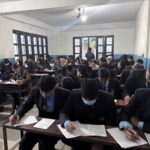
Examinations hold immense influence in Nepal. From grade promotion to scholarship opportunities, marks often dictate a student’s future. This exam-centric culture pushes students and parents to focus relentlessly on scores, sometimes at the cost of deeper learning. Such pressure contributes to stress, competition over collaboration, and a narrow definition of success.
7. Insufficient Use of Technology
While digital learning has grown rapidly, especially after the pandemic, its integration into mainstream schooling remains inconsistent. Access to devices, internet connectivity, and digital content varies greatly. Many teachers and students are still adjusting to online platforms, even as education steadily embraces technology. Without equitable access and proper training, technology’s promise remains only partially fulfilled.
8. Societal and Economic Pressures
Beyond schools and curricula, social and economic realities shape educational outcomes. In many communities, children are expected to contribute to household income, leaving less time for study. Families in lower-income brackets may prioritize immediate survival over long-term education goals. These pressures impact attendance, focus, and the ability to pursue advanced learning.
Why These Challenges Matter
The true purpose of education extends beyond sectional exams and certificates. Education should unlock curiosity, instill confidence, and equip students with both knowledge and life skills. When foundational challenges persist, the system fails not just individual students, but the society that depends on educated citizens for its progress.
A Way Forward
Addressing these challenges requires collaboration — from policymakers to teachers, parents, and communities. We need curriculum reform grounded in real-world relevance, continuous teacher development, equitable resource distribution, and an educational culture that values understanding over marks. Digital tools should enhance learning, not replace the human spark that ignites curiosity. Most importantly, education should nurture resilient learners who can adapt, create, and contribute meaningfully to Nepal’s future.
Final Thought
The challenges of the Nepali education system are deep-rooted, but not insurmountable. By acknowledging them honestly and working together, Nepal can transform education from a pathway of memorization to a journey of discovery. When we educate with purpose and passion, every classroom becomes a place where young minds learn not just to succeed in exams — but to thrive in life.
